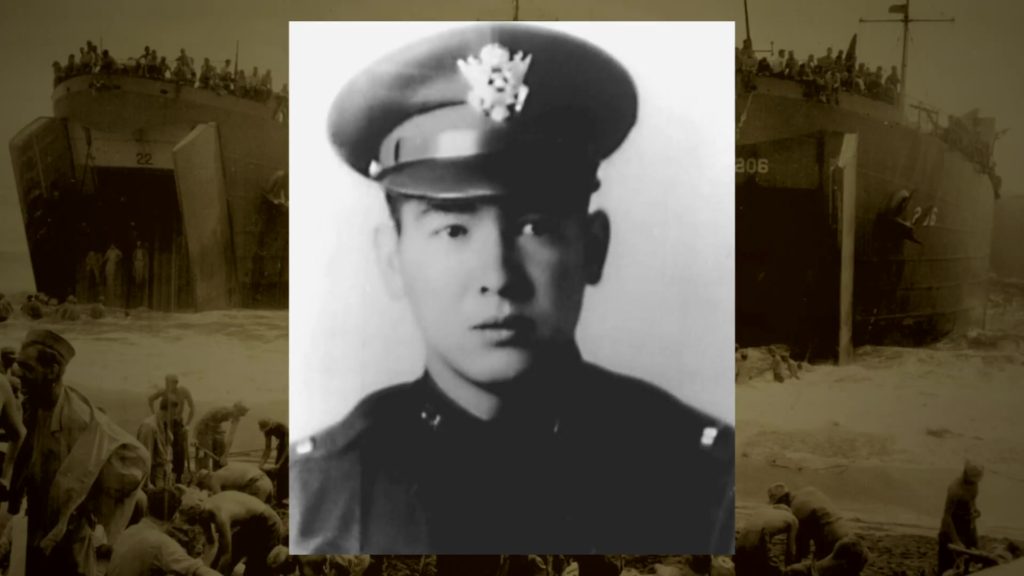
John Yang:
The Japanese attack on Pearl Harbor in 1941 drew the United States into World War II and altered the life of Francis Brown Wai than a young Army Lieutenant stationed on Oahu. The son of a Hawaiian mother and a Chinese immigrant father, Wai was a natural athlete playing football and other sports at UCLA.
It was during the 1944 allied campaign to liberate the Philippine Islands from Japan that Wai by then a captain displayed selfless sacrifice. According to his citation, Wai landed on a beach codename Red and found the soldiers already ashore leaderless, disorganized and pinned down by machine gunfire.
Even though he was wounded he assumed command and lead soldiers inland sometimes deliberately drawing fire to expose the enemy's positions. He died while leading the assault on the last remaining Japanese pillbox.
His commander recommended him for the Medal of Honor the highest military honor. But when the paperwork reached Washington, it was downgraded to the Distinguished Service Cross. In 1996, Congress directed the Pentagon to review military records to look for discrimination in the Honors awarded Asian Americans during World War II.
The defense secretary determined that Wai deserved the Medal of Honor.
ncG1vNJzZmivp6x7sa7SZ6arn1%2Bjsri%2Fx6isq2ejnby4e9OhnGaglae8qq%2BMmpqtoZ%2BjwG67xWaamqikYrOzrc2coKxlkqe8uLqMsJiiZZmjeri70aWbZq%2BRp3qqtQ%3D%3D